

Last verified November 2026
Where the Lactose in Whey Comes From
Milk has two main proteins (casein and whey) swimming alongside water, fat, and lactose, which is natural milk sugar.
When cheesemakers separate milk into solid curds and liquid whey, almost all of that water-soluble lactose stays behind in the liquid. To turn raw liquid whey into protein you actually want to drink, producers run it through fine filters to strip out the water, fat, and lactose.
The rule of thumb is simple: the more it's filtered, the higher the protein content, and the less lactose stays behind. Stop the filtration early, and you get a lactose-heavy concentrate. Push it all the way to pure isolated protein fractions, and the lactose drops close to zero.
How Much Lactose Each Type of Whey Has
If you have ever searched for how much lactose is in whey concentrate, you have probably seen a viral number floating around the internet: 3 to 8 grams per scoop.
Here is the problem: that figure doesn't match the industry standard for WPC80. Dairy industry standards measure lactose as a percentage of the powder's weight, not grams per serving. Whey protein concentrate at 80% protein (known in the dairy industry as WPC80) is only 4% to 8% lactose by weight. In a standard 30g scoop, that works out to roughly 1.2 to 2.4 grams of lactose.
You only see huge lactose numbers in lower-protein concentrates like WPC34, which is about half lactose.
Here is how the numbers actually shake out across different types of whey, based on U.S. Dairy Export Council (USDEC) and American Dairy Products Institute (ADPI) standards:
| Whey type | Protein (% by weight) | Typical lactose (% by weight) | Estimated lactose per 30g scoop |
|---|---|---|---|
🥛Whey concentrate (WPC34) |
34% | 48% to 52% | 14.4g to 15.6g |
🥤Whey concentrate (WPC80) |
80% | 4% to 8% | 1.2g to 2.4g |
💧Whey isolate (WPI) |
90%+ | 0.5% to 1.0% | 0.15g to 0.3g |
✂️Whey hydrolysate (WPH) |
Varies | Matches base whey | Matches base whey |
Per-scoop figures are estimates: the typical lactose percentage applied to a 30g scoop. Sources: USDEC Reference Manual for U.S. Whey and Lactose Products; ADPI Whey Protein Isolate Standard.
What About Whey Hydrolysate
Hydrolysed whey is whey protein that has been broken down into smaller chains using enzymes or chemical treatment. Because producers can make it starting from either a concentrate or an isolate, there is no single lactose number for hydrolysate. Its lactose content simply matches whichever base whey it was made from.
Lactose is only one way these formats differ. For the rest, see protein shots vs. protein powder vs. ready-to-drink.
What Is BLG Whey, and Does It Have Lactose
Most people think "whey" is a single protein. It isn't. Whey is actually a bucket of smaller sub-proteins, and the star of the show is beta-lactoglobulin (BLG).
BLG makes up 50% to 65% of all the protein in whey (World Allergy Organization).
Most whey protein stops at regular isolate. Going a step further separates the BLG fraction on its own (one maker crystallises it out of whey isolate). Pushing purification that far strips out the leftover baggage, leaving a crystal-clear protein that drinks like juice instead of a thick, chalky milkshake.
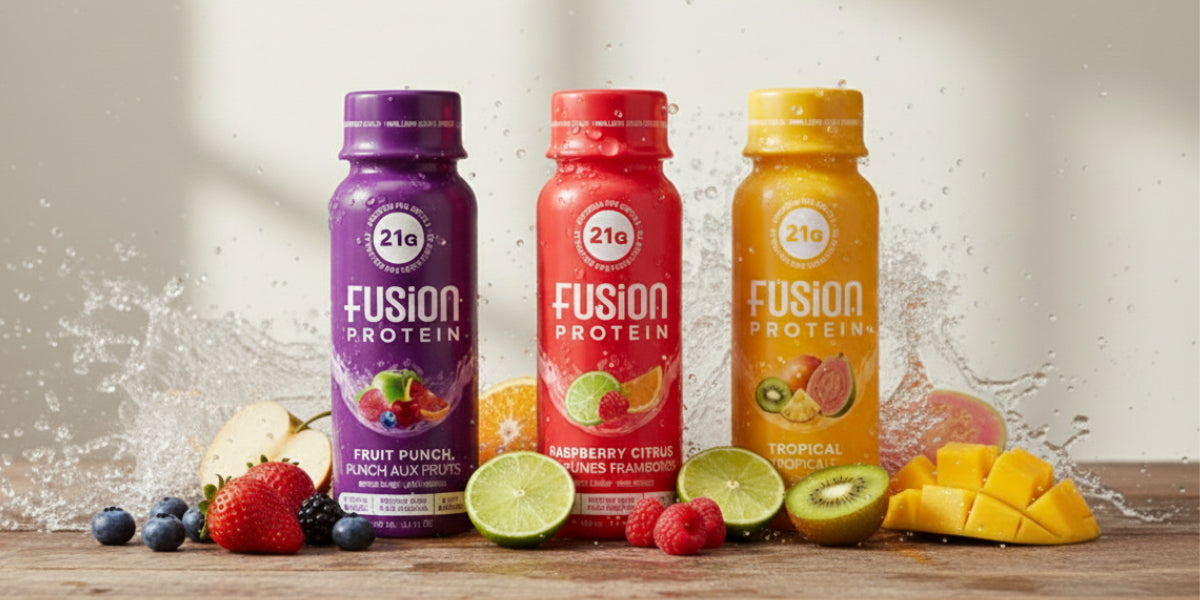
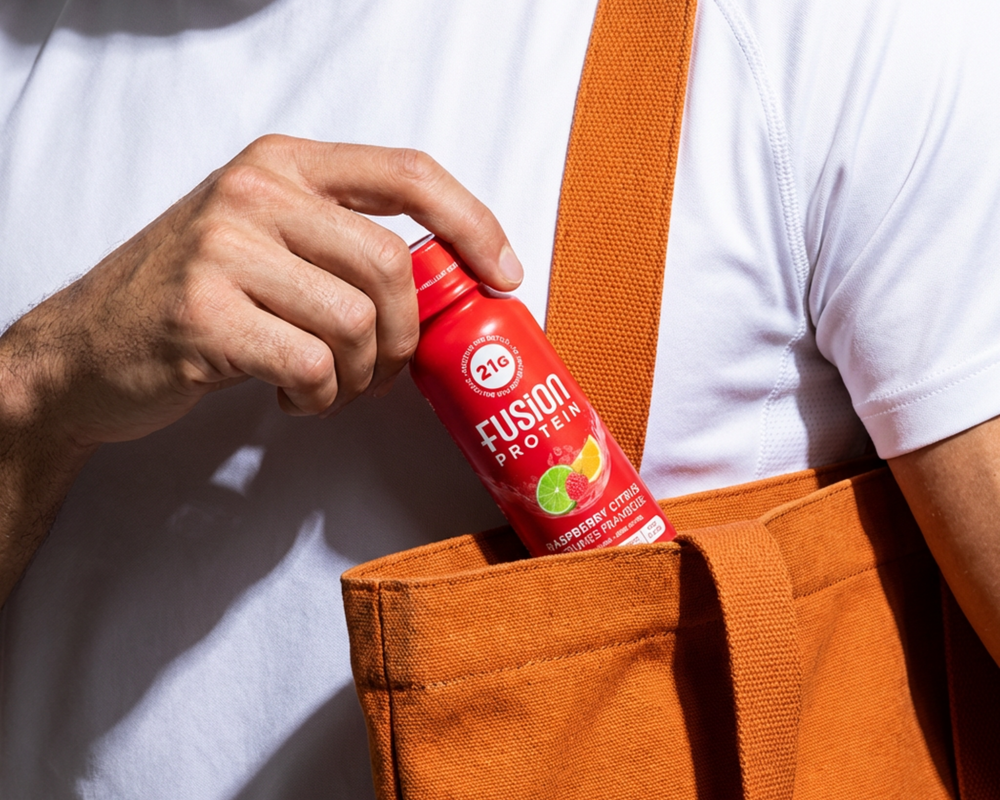
BLG is the protein in Fusion Protein Shots. Flip our bottle around and you will see Beta-lactoglobulin (whey protein) right on the label. You get 21g of protein in a tiny 100ml shot labelled lactose-free.
Lactose-free isn't milk-free. Even without the lactose, BLG is a milk protein. Our bottle still says "Contains: Milk", which brings us to the biggest mix-up in the supplement aisle.
Is Whey Protein Dairy
Yes. If it comes from cow's milk, it is dairy. Period.
People often treat lactose-free and dairy-free as the same thing, but mixing them up can wreck your day. CFIA counts whey and whey protein as milk ingredients, so a food that contains them can't be called dairy-free. You can filter out every last trace of milk sugar to make whey lactose-free, but the protein left behind is still dairy.
Whether you can drink it comes down to why you ditch milk in the first place:
Lactose intolerance (stomach vs. sugar)
Your gut is just short on lactase, the enzyme that breaks down milk sugar. Drink too much lactose and you get hit with bloating, gas, and cramps. It is annoying, not dangerous (Food Allergy Canada). Take the lactose out and you take away the trigger.
Milk allergy (immune system vs. protein)
This is a full-blown immune reaction to the actual milk proteins, including casein, whey, and BLG (known to allergists as Bos d 5). Health Canada lists milk as a priority allergen, and a reaction can be life-threatening. If you have a true milk allergy, even lactose-free whey is off the table.
Can You Have Whey Protein If You're Lactose Intolerant
Usually, yes. Being lactose intolerant doesn't mean a single drop of dairy will ruin your afternoon. Your gut usually has a tipping point, and a scoop of isolate or WPC80 sits well below it.
According to the National Institute of Diabetes and Digestive and Kidney Diseases (NIDDK) and an NIH systematic review, most people with lactose intolerance can handle up to 12 grams of lactose at once (about a full cup of milk) with zero or barely noticeable symptoms. Spread out over the day, 24 grams was generally tolerated in the NIH review.
Compare that 12g threshold to what is actually in your protein:
- Whey isolate (WPI): 0.15g to 0.3g of lactose per scoop, a tiny fraction of what triggers most stomachs.
- Lactose-free whey or BLG: no detectable lactose. If your gut is ultra-sensitive and you don't want to play roulette with trace amounts, this is zero guesswork.
- One scoop of WPC80: 1.2g to 2.4g of lactose, which many lactose-intolerant lifters drink without flinching.
- Double-scooping concentrate, which doubles the lactose.
- Mixing powder with regular milk. A cup of milk is about 12g of lactose on its own.
- Blends high in concentrate or milk powder. Check the ingredient list (step 2 below).
- Low-protein concentrate (WPC34), which can pack over 14g of lactose per scoop.
Of course, everyone's gut is wired a little differently. If you are making big changes to your diet to manage symptoms, the NIDDK recommends checking in with a doctor or registered dietitian.
If heaviness bothers you more than lactose does, see which protein shot feels least heavy.
What "Lactose-Free" Means on a Canadian Label
You might hear some US supplement brands claim that whey can never truly be lactose-free because a few stray molecules could theoretically survive filtration.
In Canada, food labels don't run on philosophy. They run on lab tests.
While Canada's Food and Drug Regulations don't set a specific numerical cutoff for lactose claims, the Canadian Food Inspection Agency (CFIA) sets out guidance on how brands can use the term:
"Lactose-free"
There is no detectable lactose in the food when tested using an acceptable analytical method.
"Lactose-reduced"
The product has been processed to cut lactose by at least 25% compared to the regular version.
So when you see lactose-free on a Canadian protein label, it isn't a marketing guess. It means no lactose should be detectable with an acceptable lab test.
How to Check a Protein Label for Lactose
You don't need a food science degree to figure out if a protein will mess with your stomach. Just flip the tub or bottle around and check four spots in 10 seconds:
Look for a "Lactose-Free" claim
In Canada, if it says lactose-free on the bottle, it should have no detectable lactose.
Read the ingredient list from the top
If the first protein ingredient is whey protein isolate or beta-lactoglobulin, lactose is already close to zero. If it starts with whey protein concentrate, or hides behind a "proprietary protein blend" that mixes concentrate with milk powder, expect more lactose.
Check the sugar line
Lactose is a natural milk sugar, so it has to show up under Sugars. If an unflavoured or artificially sweetened whey has 0g sugar, there is no meaningful lactose hiding in there. If it shows 3g to 5g of sugar per scoop and has no added sugars, you are looking straight at lactose.
Know the dairy code words
Food Allergy Canada lists a long run of label names that mean milk is inside, including whey, lactoglobulin (like beta-lactoglobulin), casein, lactalbumin, and lactose itself. All of these mean milk. "Contains: Milk" flags milk protein for people with allergies, not how much lactose is inside.
Lactose-Free Protein, No Shaker Required
Tired of chalky tubs and smelly shaker bottles? Fusion Protein Shots give you beta-lactoglobulin (BLG) whey protein that goes down like a crisp fruit shot.

- 21g of complete whey protein
- Lactose-free
- 90 calories, 0g sugar, 0g fat
- 100ml pocket-sized shot (twist, shoot, done)
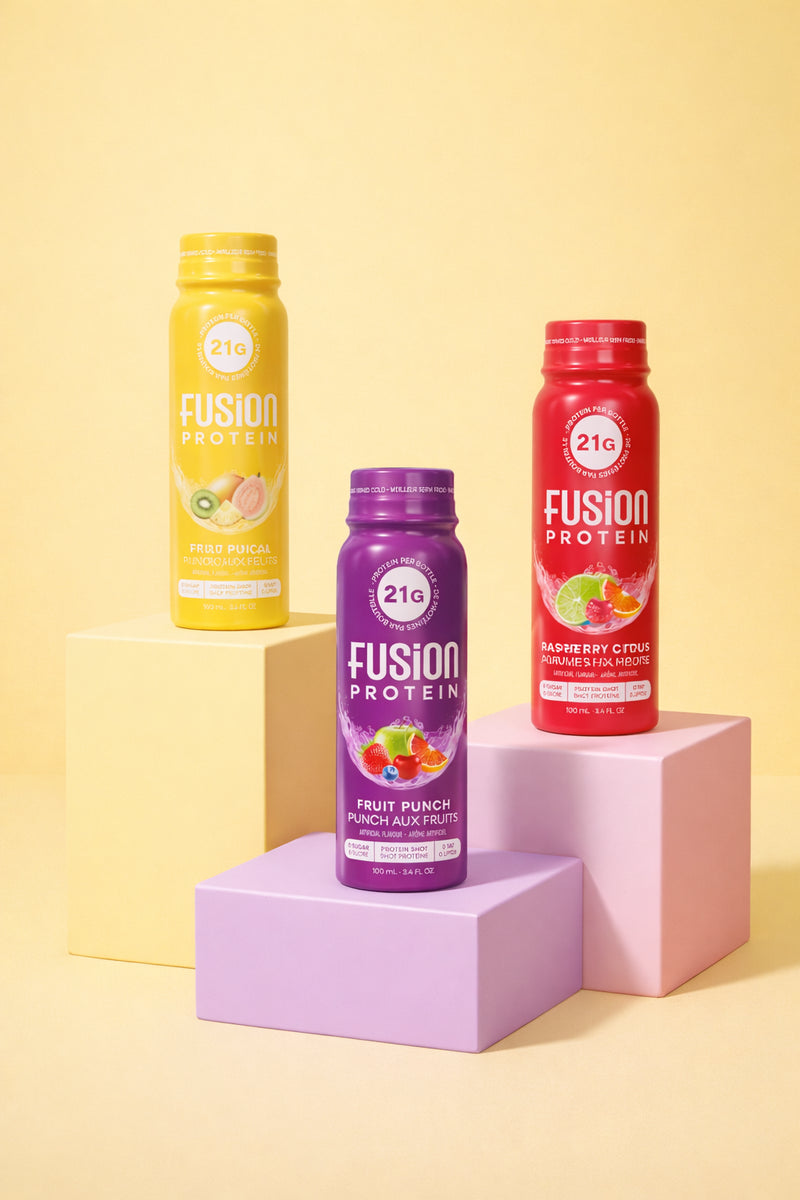
- Three refreshing flavours: Raspberry Citrus, Tropical and Fruit Punch
New to protein shots? Start with are protein shots good for you and how many protein shots per day you actually need.
Frequently Asked Questions
Is whey protein isolate lactose-free
Does clear whey have lactose
Is whey protein dairy-free
How much lactose is in whey protein powder
What is the best protein for lactose intolerance
Is BLG whey lactose-free
Lactose-free, no shaker.
21g of BLG whey protein in a 100ml shot. Twist, shoot, done.
Shop Fusion Protein →Our Guides
Should You Drink a Protein Shake on Rest Days?
